Commercial Bat Removal in Wyoming
A bat colony in a commercial building is a liability, a health-code exposure, and a documentation problem. We handle phased exclusion, HEPA guano remediation, and written inspection reports for Wyoming warehouses, schools, churches, and multifamily properties.
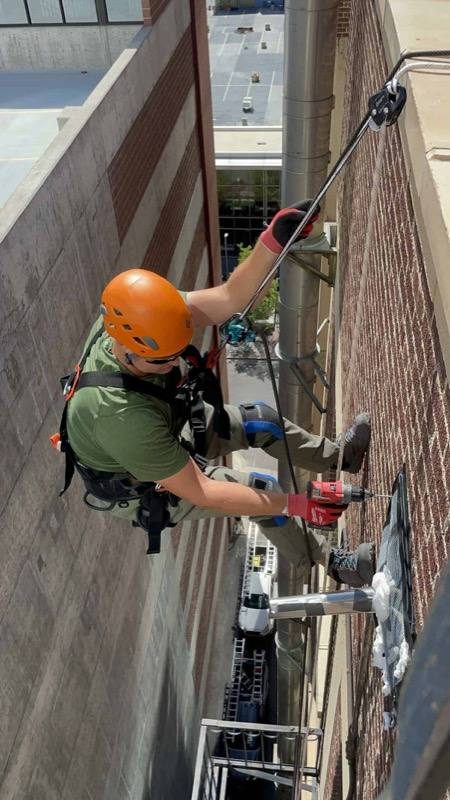
Scale, occupancy, and liability change the entire job
Commercial bat infestations differ from residential ones in three ways: scale, occupancy, and liability. A bigger building holds a bigger colony with more entry points. An occupied workplace means employees, customers, students, or tenants are exposed to both the bats and the guano. And a business owner carries legal duties to those people that a homeowner does not.
Scale changes the method. A house might have two or three entry points. A warehouse in Casper or a school in Cheyenne can have dozens, spread across roof seams, loading-dock canopies, rooftop equipment curbs, and the gaps where two building additions meet. That takes a mapped, phased exclusion, not a one-day job.
Occupancy changes the schedule. Guano remediation in an active workplace cannot happen the way it would in an empty attic. The work has to be contained, ventilated, and timed around operations. A good commercial crew plans around your hours instead of forcing you to plan around theirs.
The maternity-season exclusion restriction does not bend for a production schedule
Wyoming Game and Fish Department restricts bat exclusion during the maternity season, roughly June through mid-August, because pups are too young to fly and sealing the building would trap them inside. A commercial property cannot buy its way around that window.
What a business can do during the closed season is everything that comes before the exclusion. A technician can inspect the structure, map every active and potential entry point, assess guano accumulation, document the health exposure, and write a remediation plan with a scheduled exclusion date for when the legal window opens. That turns a frustrating wait into a planned project with a start date, a scope, and a budget already approved.
All bat species in Wyoming are protected under state wildlife law, and several are also federally protected under the Endangered Species Act. If a vendor offers to spray, poison, or trap the colony out on your timeline, that is a signal to stop and call someone who works within the law.
The health and liability side of a commercial bat infestation
Bat guano can harbor Histoplasma capsulatum, the fungus that causes histoplasmosis, a respiratory illness contracted by breathing in spores from disturbed droppings. The CDC and NIOSH publish specific guidance on occupational exposure to bat droppings, including containment, ventilation, and respiratory protection requirements. In a workplace, that guidance is not a suggestion.
Disturbing a guano deposit with a shop vacuum and a dust mask is exactly how spores get aerosolized and inhaled. Proper remediation isolates the area, suppresses dust, removes the material under controlled conditions, decontaminates the surfaces, and disposes of the waste correctly. Then it gets documented, because the property owner, the insurer, and in a leased building the tenant all need a record that the hazard was handled correctly.
Property types we handle across Wyoming
Warehouses and distribution centers
Long rooflines, expansion joints, and rooftop equipment curbs create dozens of potential entries. High open ceilings give a colony room to establish before anyone notices.
Schools and churches
Older masonry, steeples, bell towers, and attic voids are classic maternity-colony sites. These buildings carry the highest sensitivity because children and congregations are the occupants.
Multifamily and apartment buildings
Shared attics and parapet walls let a colony spread between units. A property manager carries duty-of-care to every tenant and the documentation a lease and insurer require.
Offices and retail
Drop ceilings, HVAC chases, and signage cavities give bats a way in. A colony over a customer-facing space is both a health exposure and a reputation risk.
Historic and government buildings
Decades of settling open gaps faster than they get sealed. Wyoming has many historic structures across Cheyenne, Laramie, and Sheridan where professional planning is essential.
Four phases, every commercial job
Each phase produces a record. On a large Wyoming building each phase can take longer than an entire residential job, which is why scope and sequencing matter.
Inspection and mapping
A technician surveys the full structure inside and out: roofline, parapets, expansion joints, rooftop units, soffits, loading areas, and any interior roost evidence. The output is a map of active entry points, an estimate of colony size and species, and a measured assessment of guano accumulation.
Timed exclusion
Once the Wyoming Game and Fish legal window is open, one-way exclusion devices go in at every active entry point. Bats exit to forage at night but cannot return. On a large structure, devices stay in place longer than on a house because a bigger colony with more exits takes more time to fully vacate.
Guano remediation
With the colony excluded, guano is removed under containment using HEPA-filtered equipment. Contaminated insulation or materials are taken out where needed, and surfaces are decontaminated with EPA-registered products. This phase is scheduled around your operations and kept away from occupied areas.
Permanent prevention
Every entry point and likely future gap is permanently sealed with commercial-grade materials: exterior-rated sealant, metal flashing, hardware cloth over vents, and mesh at equipment penetrations. Many commercial properties then move to a maintenance inspection schedule.
Bat removal above ladder reach
Condos, hotels, offices, and other tall buildings need a dedicated access plan. See our high-rise bat removal service in Wyoming.
Commercial bat removal in Wyoming, answered
Does a business have to close during commercial bat removal in Wyoming?
Usually no. Most commercial exclusion happens at the roost entry points on the building exterior, so technicians can work while the business stays open. Active guano remediation inside an occupied space is scheduled around your hours, and the affected area is contained and ventilated before crews enter.
Can a Wyoming business remove bats during maternity season?
No. Wyoming Game and Fish Department restricts exclusion during bat maternity season, roughly June through mid-August, because flightless pups would be trapped inside the structure. During that window a commercial property can still get an inspection, a guano assessment, a written remediation plan, and a scheduled exclusion date.
Is bat guano in a Wyoming workplace an OSHA or health issue?
It can be. Accumulated bat guano can harbor Histoplasma capsulatum, the fungus that causes histoplasmosis. The CDC and NIOSH publish specific workplace guidance for occupational exposure to bat droppings. An employer with guano accumulating in an occupied building has a duty to address a recognized hazard.
What documentation do we get for insurance or compliance records?
A legitimate commercial wildlife company provides a written inspection report, a scope of work, the exclusion and remediation methods used, before-and-after documentation, and warranty terms. Property managers use this for insurance claims, tenant communication, and compliance records.
Start with a documented inspection.
We inspect the full structure, map every entry point, assess guano accumulation, and give you a written scope and schedule. Serving commercial properties across Wyoming: Cheyenne, Casper, Gillette, Sheridan, Laramie, Rock Springs, Jackson, and statewide.